It is always great to get feedback from our guests, here are a couple of the latest we have received……
—————————————————
I would like to compliment your company on its outstanding service and staff. We recently sailed for 3 days/2night on the Santa Maria with Mark, Tara, & Erin. We were lucky to have a smaller group of 5 and it was absolutely the highlight of our trip. Mark was a wealth of information about the different species and locations we would be visiting. He was constantly working to make everyone comfortable and working on the boat, you can tell he has a true appreciation of how beautiful that boat is and he was tending to every detail on board.
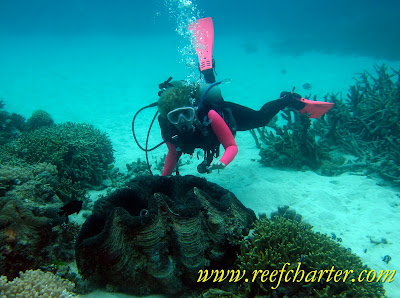
Erin kept all of us safe and well fed with excellent three meals a day and snacks at anytime we needed something. She was also keeping a very watchful eye while we were out, making us feel much safer to venture away from the boat snorkeling. There is too much to say about Tara, she was amazing, helping everyone to be comfortable and safe in the diving process, and so patient to work with us through our individual troubles in the water. This trip without Tara would have been completely different and I am very thankful for her presence and her knowledge while diving.
In the evenings we felt like we were in a group of friends, it was very nice to sit and talk with everyone. We found our ways of keeping entertained and it was quite a perfect and surreal experience.
If I found anything that could be improved I would suggest some meats and eggs in the breakfast menu and some bottles of wine furnished by the boat with dinner. If these are the only improvements I can find, please know it was an amazing experience and we loved the opportunity to be part of it. I will not miss this on any of my future trips to Australia.
My many thanks to Mark, Erin, and Tara of the Santa Maria. – Best Regards, Aaron
—————————————————
My boyfriend and I recently took a 3 day trip (May 24-26) on the Santa Maria. I just wanted to take the time to write about our wonderful experience and brag on the wonderful crew! There is not one thing that I would have changed about this trip. I loved that we had a small group so we were able to receive personal attention when it came to our scuba instruction.
Mark, our captain, was extremely intelligent and helpful. He knew so much about the reef, especially the marine life living there, and never hesitated to answer any of the questions I had. Erin was also wonderful. She was always very helpful and polite, and her cooking was excellent! Our scuba instructor, Tara, was absolutely amazing. She was so patient and helpful to everyone, especially me.
I came on the trip with absolutely no prior scuba experience. I was extremely nervous and anxious the entire trip. I panicked during my first dive, but Tara remained supportive and encouraging. She worked with me one-on-one for quite some time before I was convinced to give diving another try. She never once got the slightest bit irritated with me. She was so patient and encouraging the entire time. She was the only reason that I did not give up. Without her support and personal help I never would have given scuba dive along the beautiful Great Barrier Reef. I cannot thank her enough. Aside from the fantastic crew, the dive sights were beautiful and the prices very reasonable.
Overall, we had an amazing experience onboard the Santa Maria. I would easily suggest this trip to anybody wishing to have an unforgettable scuba diving experience in Australia. – Sincerely, Alana
—————————————————
Thanks again guys for this great feedback….
If you want to come and experience the Great Barrier Reef like our guests above. Come and join us…. We’d love to have you onboard!