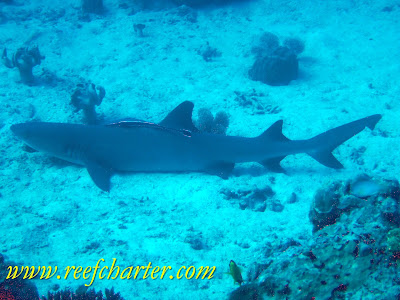
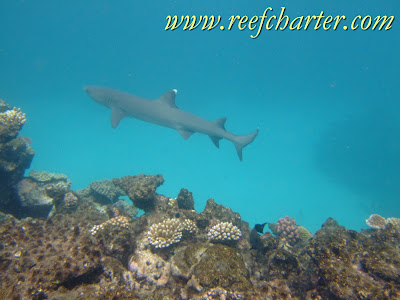
This is the most common shark spotted by our guests, whether they are snorkeling or scuba diving. The white tip reef shark is a relatively small shark. The average size only measuring about 1.8 metres or 6 feet long. This is one of the best parts of our jobs, seeing people who less then 30 minutes ago were scared about sharing the water with a shark. Now they are seeing them up close and experiencing sharks in their natural habit. Immediately realizing that all the television and movie myths are just that myths. One of our guests last year went from being a nervous snorkeller to scuba diving, and her reason I want to ‘dive with the sharks’.
As you can see from the photo above, all sharks do not require to keep swimming to stay alive, this again is another myth. White Tip Sharks can move water through their gills as they lay still on the bottom. This species of shark tends to hang around reefs for long periods of time, sometimes years. They hunt at night feeding on octopus, fish and other reef creatures, including lobsters and crabs. Not a bad diet. During a night dive, you can observe them slowly swimming along the reef edge looking for that evening snack. Unlike other shark species they do not get into a feeding frenzy.
They are not aggressive towards humans at all, unless provoked and then purely a defensive measure. Humans feeding sharks can lead to confusion and sharks may mistakenly grab the hand that feeds it. Another good reason not to feed the fish, especially the big ones with big teeth.
White Tip Sharks pregnancy lasts about 10-12 months. They give birth to young called pups, this litter can contain anything up to 6 pups. Now how did the white tip shark get its name? Very easy, the white tips on the tops of the fins.
Current populations of white tip sharks are depleting at the rate of about 8% per year, due to unsustainable fishing practices in other parts of the world and its slow reproductive rate.
Swimming and diving with sharks that you must experience to really appreciate. The only way to dispel the myths and see the grace and beauty of a shark it to come and experience it in the sharks natural habitat.
Nice Post! Great Barrier Reef is one of my favorite place to visit in Australia, it adventures… when you watch Blue sea and reefs then you can not stop yourself to say “WOW”.
I hope to make it to the Great Barrier Reef some day!!!!! Your articles are great, well written and informative!!
The first ever shark I saw underwater was 12 miles off Noumea while snorkelling on the Grand Recife. We were two but my companion was some distance away, photographing coral. The shark made a semi-circle just beneath the surface and came towards me: I was absolutely terrified at and headed for the boat expecting to lose a foot. I have subsequently seen many sharks in the Pacific, also on shark dives in Bora Bora, but this first encounter remains as vivid today as 50 years ago.
I snorkelled yesterday at Scawfell Island (past Brampton Island) and I saw my first ever shark while snorkelling. I thought that I would be terrified, but I was surprising calm! My husband was VERY proud of me. We were holing hands (which I’m very thankful for!), but he said that I didn’t even squeeze his hand, I was that relaxed!
I must say though, after we saw it and it swam away fromus, we followed it slowly for a while. When it turned around and actually looked at us, that did give me the ‘heeby jeebies’ a bit!
I was thrilled to have seen one, but it’s not something that I would need to see each time in order to say that snorkelling was awesome.
SO, SO LOVE the Whitsundays! I’m so thankful that I live in this part of the world! What a privilege it is to have all of this on my back doorstep!